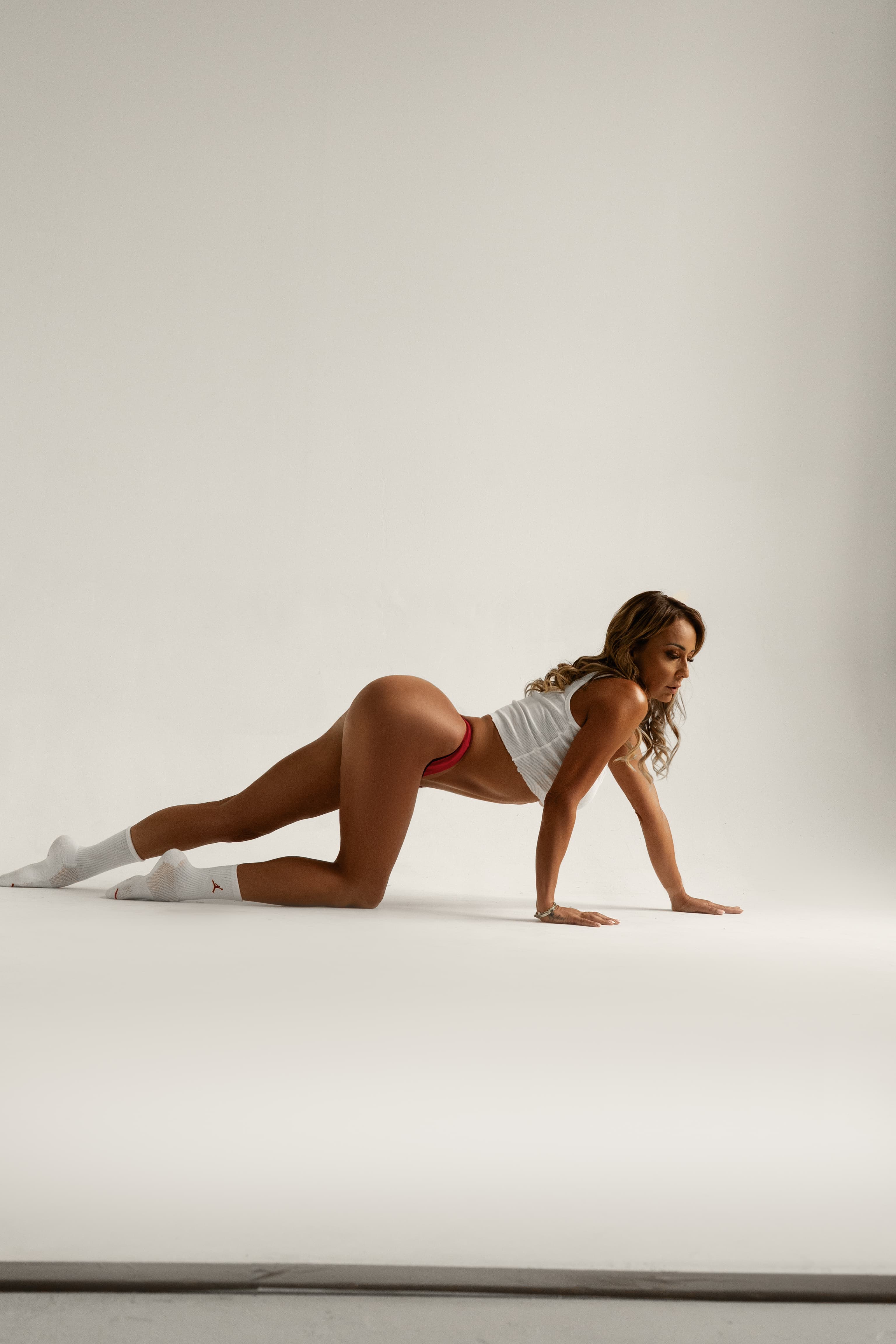
Nobody walks into their first shoot feeling prepared. Here's why that's not a problem, and what the psychology of readiness actually tells us about showing up.
Almost every client I have ever worked with has said some version of the same thing before their shoot: "I just don't feel ready yet." They're waiting for a version of themselves that feels confident enough, lean enough, polished enough - a future self who will finally be prepared to stand in front of a camera. That version of themselves never arrives. Not because they're not good enough, but because readiness is not a feeling. It's a decision.
Why the Brain Manufactures Doubt Before Something New
The anticipatory anxiety you feel before a shoot is not a signal that something is wrong - it is your nervous system doing exactly what it is designed to do. Novelty triggers threat-detection. When we have no prior experience to reference, the brain fills that gap with worst-case projections. It is the same mechanism that fires before a job interview, a first competition, or even a first date. It is not evidence of unpreparedness. It is evidence that you're about to do something that matters to you.
The research on performance anxiety consistently shows that reframing the sensation - understanding it as activation rather than threat - measurably improves outcomes. Athletes use this. Performers use this. You can use it walking into a studio.
The Readiness Trap
The dangerous thing about waiting until you feel ready is that the feeling is self-defeating. Every week you wait, you accumulate more time to build more doubt. The internal checklist grows - shoulders need to be more defined, conditioning needs to be tighter, tan needs to be darker - and none of it has a finish line. There will always be something else on that list.
“The shoot doesn't document who you're trying to become. It documents who you are right now - and that is always worth capturing.”
- Zlata JPEG
What Actually Happens on the Day
In my experience - having worked with clients from 18 to 55, many of whom had never been photographed professionally before - the first ten minutes of a shoot are almost always the hardest. People are stiff. They don't know where to put their hands. They're acutely aware of the camera. And then something shifts. The conversation settles, the lights start to feel normal, and the work begins in earnest.
Nobody who has ever shot with me left feeling the way they felt in those first ten minutes. That initial discomfort is not a sign that the shoot is going badly - it is the entry point. You move through it, not around it.
My Job Is to Hold the Process - So You Don't Have To
From the first enquiry to final delivery, I design the entire process to remove as many unknowns as possible. You will know what to expect at every stage - what to bring, what happens in what order, how posing direction works, what the turnaround looks like. That transparency exists precisely because I know that the unknown is where doubt lives. When nothing is a surprise, the nervous system has nothing to catastrophise about.
You do not need to arrive ready. You only need to arrive.