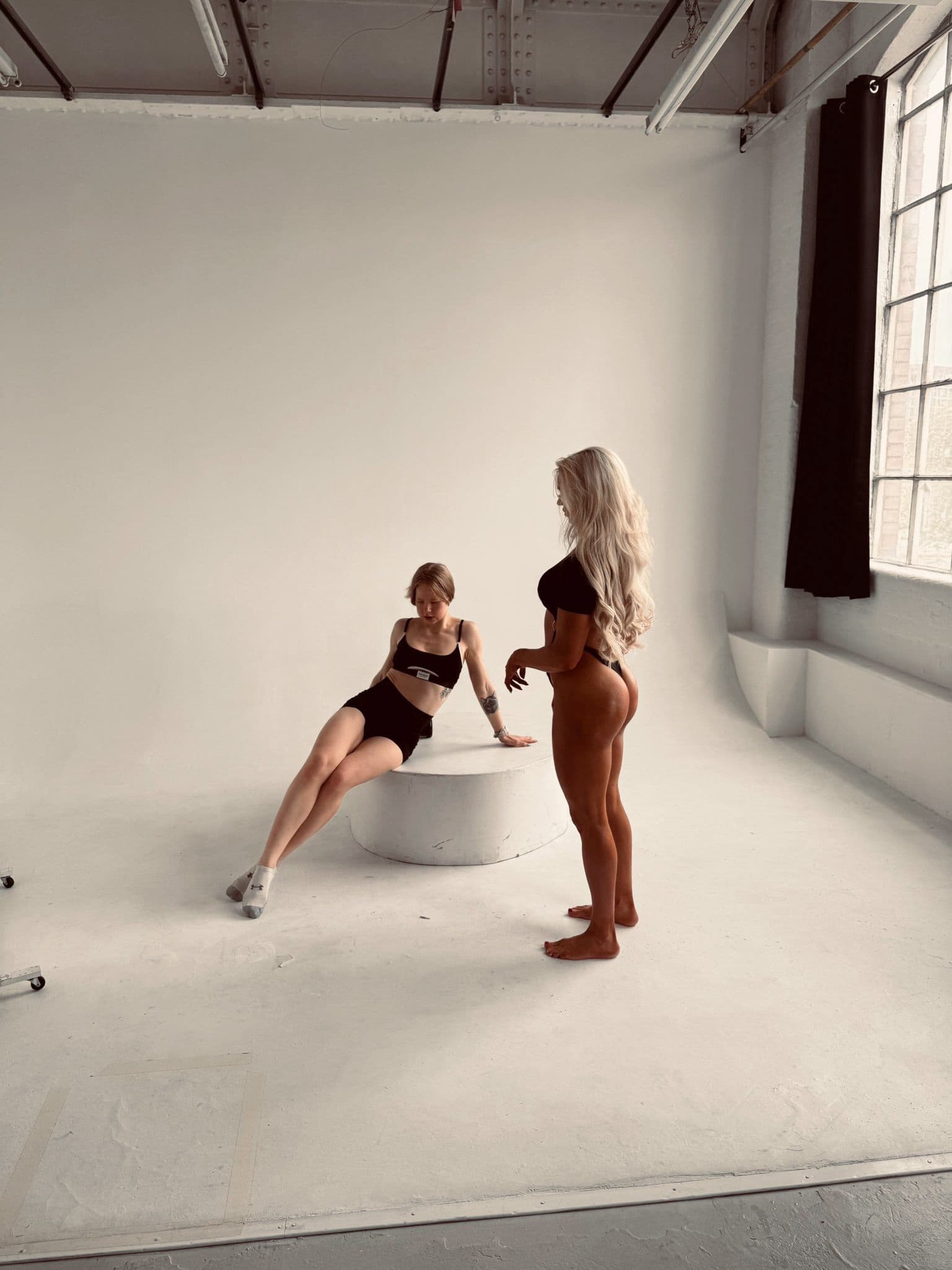
If you have hesitated to book a shoot because of something you experienced or heard about, your instinct was probably right. Here is what professional conduct actually looks like - and what it does not.
A significant number of women who enquire with me mention, at some point in our conversation, that they have been hesitant about booking a shoot for a long time. Not because they did not want the photographs. Because they had heard something, or experienced something, that made the idea of being alone in a studio with a photographer feel unsafe. That hesitation is not irrational. It is a reasonable response to a real pattern of behaviour that exists in this industry.
This post is not intended to frighten anyone. It is intended to do the opposite - to give you a clear, specific framework for what professional conduct looks like, what falls outside it, and what you are completely entitled to expect and insist upon before, during, and after a shoot.
What Professional Conduct Actually Looks Like
A professional photographer - regardless of gender - operates with a consistent set of behaviours that exist to protect the client. These are not courtesies. They are baseline standards. If any of the following are absent, that absence is meaningful.
You should be offered a separate, private space to change. Full stop. Even if you have said you are comfortable changing in the same room, a professional will step out or turn away. Comfort in the moment does not override the principle. I offer a separate changing area to every client and step away during changes - even when a client explicitly tells me it is fine. It is not about what they said. It is about what the standard should be.
Posing direction should be verbal and specific. A photographer should be able to tell you exactly where to place your hands, how to angle your hips, where to direct your gaze - without touching you. If physical adjustment is ever genuinely necessary, it should be asked for explicitly, explained before it happens, and limited to neutral areas such as the shoulder or arm. Anything beyond that requires clear, unambiguous consent.
Clear Red Flags - These Are Not Ambiguous
Some behaviours are not grey areas. If a photographer says or does any of the following, the session should end and you should leave.
There is a clear distinction between professional encouragement and personal commentary. "You look great," "that angle is working really well," "this shot is strong" - these are part of normal, healthy communication during a shoot. They are directional and image-focused. What falls outside that are comments that express personal attraction rather than professional observation - "I find you really beautiful," "you're so attractive," "your body is incredible." The difference is whose experience is being centred. Encouragement is about the work. The comments above are about how the photographer personally responds to you - and that has no place in a professional session.
Any suggestion that more explicit or revealing content would produce "better" images, or that removing more clothing is somehow in your creative interest, is manipulative. Your brief is your brief. It does not expand because someone frames it as an artistic recommendation.
Pressure to continue shooting when you have said you are done, tired, or uncomfortable. You can end a session at any point for any reason. A professional will not argue with this or attempt to change your mind.
Requests to keep the shoot private, not to share the images publicly, or to avoid mentioning the photographer to others. Legitimate photographers want their work seen. Requests for secrecy protect the photographer, not you.
The Grey Areas - and Why Professionals Avoid Them
Some comments exist in territory that is harder to name immediately but still worth examining. These are the kinds of things that do not feel overtly wrong in the moment but that leave you unsettled afterwards.
"Your partner is so lucky" or "whoever you're with must love these." These comments are framed as compliments but carry a subtext about your attractiveness that has no place in a professional session. They are the kind of remark that would never be directed at a male client.
"Most of my clients are comfortable going further than this." This is social pressure dressed as reassurance. What other clients choose has no bearing on what you choose.
"You should be more confident - you have nothing to hide." Confidence is not the issue, and framing hesitation as a confidence problem is a way of making your boundary seem like a personal failing rather than a legitimate decision.
A good photographer - and I include myself in this - is careful about even the grey areas, precisely because they are grey. The standard I hold myself to is not "is this technically acceptable." It is "would this client feel completely safe and respected if they reflected on this session tomorrow." That is a higher bar, and it is the right one.
“The absence of an explicit boundary does not create permission. Professional conduct does not wait to be told where the line is.”
- Zlata JPEG
Before You Book - What to Look For
A photographer's conduct before the shoot tells you a great deal about how they will behave during it. Take note of how they communicate in early enquiries. Are they clear and professional? Do they answer your questions directly? Do they volunteer information about what the shoot process involves, or do you have to extract it?
Look at their public presence - not just the portfolio, but how they talk about their clients and their work. Language that frames female clients as subjects to be observed rather than people to be collaborated with is worth taking seriously.
It is completely reasonable to ask, before booking: Do you offer a private changing area? Will I be able to bring someone with me? How do you handle posing direction? These are not unusual questions. A professional will answer them without hesitation. Defensiveness or dismissiveness in response to basic questions about your safety is itself an answer.
During the Shoot - What You Are Entitled to Do
You can bring someone with you. A friend, a partner, a family member - whoever makes you feel more at ease. You do not need to explain or justify this. If a photographer discourages you from bringing someone or makes it seem unusual, that is a red flag.
You can ask to see the images as the session progresses. You can ask for a particular setup to stop. You can change your mind about a pose, an outfit, or a setup that you originally agreed to. Agreement given before a shoot is not an irrevocable contract - your comfort in the room at the time is what matters.
You can leave. At any point, for any reason, with no explanation required. You are not obligated to complete a session that feels wrong, regardless of what has been paid or agreed.
A Note on Female Photographers
Booking a female photographer does reduce certain risks, and I understand why many clients specifically seek that out. It is a legitimate preference and one I respect. However, it is worth being clear that gender does not automatically confer professionalism. The standards described in this post apply regardless of who is behind the camera - and a female photographer who cuts corners on client safety or comfort is still cutting corners.
I am a female photographer and a competitive athlete - I have been on both sides of the camera, and I understand viscerally what it means to be in a position of physical vulnerability in front of someone you have just met. That understanding shapes every decision I make about how I run sessions. It is not a selling point. It is a baseline responsibility.
If you have questions about how I work before you make any decision about booking, I am happy to answer them. There are no unusual questions when it comes to your safety - only reasonable ones.